Showing posts with label leg pain. Show all posts

Thursday, June 26, 2014

Can my Leg Pain cause my Back Pain?...

Problems at the Bottom Affect What's
Going on at the Top !
Many times back pain can come from something lower down. Much like a tower is only as sturdy as its base, your back is similar. Essentially your feet and legs are your base. If you are standing a certain way or your gait (the way that you walk and stand up) is altered it will start to irritate the back. Everything is connected - your feet to your ankles, ankles to your knees, knees to your hips, hips to your back. Sturdy your base and it often will stabilize the back. By the way, I'm not just referring to the lower back but the middle back as well.

The same is true in the opposite direction.  I've seen patients where they start out with neck pain but it travels to the mid-back.  Here's the bottom line...If part of the body needs help or support, your body will pull resources from somewhere else.  While your gait, your posture, and your regular activities can often give you pain that works its way up, pain can work its way down to.  Another example is arthritis; your body pulls calcium out of bones to get it when it needs it...

The Glastonbury Chiropractor is located in central Connecticut- CT Spine and Disc Center specializes in patients who suffer from sciatica, disc degeneration, bulging disc or herniated disc in the lumbar spine. For low back pain, neck pain, midback pain, headaches, fibromyalgia and more, chiropractic can help you. Call our Glastonbury office at 860-633-8756 to schedule an appointment and to see if you are a candidate for non surgical spinal decompression.

Additional Reading Resources:


Like The Glastonbury Chiropractor on Facebook

The Back Store: Cushions, Belts, Pillows, Tens, Hot and Cold Therapy and More | You Tube The Glastonbury Chiropractor

Monday, January 14, 2013

I have Pain and Numbness in my leg, Could It Be My Back?

Leg pain can often come from our backs. The term sciatica has become common because the symptoms are seen quite often.

You see, the nerve roots exit out of the spine and branch into more and more smaller and smaller nerves.

So these nerve roots are a bundle of nerves. Nerves with a various function and controls. Some nerves may cause pain, some may only create the symptom of numbness, etc.

In your back you may have pressure on a nerve that solely communicate down the leg. You may have however one that has a lot of innervation to muscles of the lower back. Hence, this person may have back pain as well.

The Glastonbury Chiropractor is located in central Connecticut- CT Spine and Disc Center specializes in patients who suffer from sciatica, disc degeneration, bulging disc or herniated disc in the lumbar spine. Call our chiropractic office at 860-633-8756 to schedule an appointment and to see if you are a candidate for non surgical spinal decompression

Additional Reading Resources:


Monday, November 26, 2012

Steroid Injections Offer Short Term Relief, study shows

The pain associated with sciatica can be intense, often shooting pains down one leg due to pressure being put on the sciatic nerve. It can also involve numbness, tingling and weakness.

Study Shows that Steroid Injections
Offer Only Short Term Relief
One of the treatments that an Orthopedic Doctor may recommend for sciatica is an epidural. This involves the injection of a steroid into the joint spaces of the spine.

A new study published in the Annals of Internal Medicine on Nov 13, showed that these steroid injections often only provide short term pain relief. This study involved 3100 patients who were followed for over a year. 23 Clinical trials were measured.

"The review showed that [epidural injections] offered only small, short-term improvement in pain and disability for people with sciatica and had no long-term effect," said Dr. Chris Maher, a professor of physiotherapy at the School of Public Health at the University of Sydney in Australia (co author).

The results showed that at 2 weeks and 3 months after treatment, 10 trials showed leg-pain relief and 14 reported improvements in disability. But after a year or more, no differences were found in leg pain, back pain or disability for those given injections compared to those given a placebo.

"Given that the treatment effect is likely to be small and short term, patients with sciatica should discuss the potential risks involved in [steroid injections] with their doctor before agreeing to the procedure" said Maher, who also is director of the George Institute for Global Health, in Sydney.

These findings are very similar to an earlier study that showed that the steroid injections are no better than anti inflammatory medications.

At our Glastonbury chiropractic Office we offer non surgical spinal decompression treatments for patients with sciatica and leg pain. Call our office to see if you are candidate for this treatment.

The Glastonbury Chiropractor is located in central Connecticut- CT Spine and Disc Center specializes in patients who suffer from sciatica, disc degeneration, bulging disc or herniated disc in the lumbar spine. Call our chiropractic office at 860-633-8756 to schedule an appointment and to see if you are a candidate for non surgical spinal decompression

Source: Steroid Shots for Sciatica: Benefits only Brief, Analysis Finds US News 11/12/2012

Additional Reading Resources:


Tuesday, May 22, 2012

Do you Suffer from Back and Leg Pain Due to Sciatica?

Sciatica pain can be a big pain in the butt- literally. Understand more about why the sciatic nerve can cause so much pain, weakness and loss of muscle strength.

Check out Arc4life's Newest Squidoo Lens: Sciatica Pain- Back and Leg Pain From Sciatica


Additional Reading Resources:

The Glastonbury Chiropractor is located in central Connecticut- CT Spine and Disc Center specializes in patients who suffer from sciatica, disc degeneration, bulging disc or herniated disc in the lumbar spine. Call our chiropractic office at 860-633-8756 to schedule an appointment and to see if you are a candidate for non surgical spinal decompression

Wednesday, March 16, 2011

The Mystery Behind the Pain of Shin Splints: PART IV Treatment of Posterolateral Shin Splints


Treatment with this type of shin splint is to stop running altogether and engage in other types of exercise. Changing your running shoes to one with a rigid heel can help. Also, getting special orthotics for the feet are recommended. These Arch supports for your shoes can be custom-made or bought off the shelf – they can help with flat feet.

Strengthening exercises is something else we recommend. Some people may even need surgery to repair the torn tendon.

  1. Toe Raises: Stand up and slowly rise up on your toes- Do this 10 times. Once you are a pro, hold onto weights and do the same thing. Do 2 sets of 10.
  2. Outward Rolls: While standing up, roll your ankle out so that the inner part of the sole is off of the floor. Slowly lower the sole back onto the floor. Do 3 sets of 10.


Just like we said in a previous section of this shin splint series, ice helps. Other treatments that help with shin splints is cold therapy. Icing the area can decrease pain and swelling. Do it for 20-30 minutes every three to four hours for two to three days, or until the pain is gone

Check out our Shin Splints Series:


Source: The Merck Manual of Medical Info

The Glastonbury Chiropractor is located in central Connecticut- CT Spine and Disc Center specializes in patients who suffer from sciatica, disc degeneration, bulging disc or herniated disc in the lumbar spine. Call our chiropractic office at 860-633-8756 to schedule an appointment and to see if you are a candidate for non surgical spinal decompression

Additional Reading Resources:


Tuesday, March 15, 2011

The Mystery Behind the Pain of Shin Splints: PART III Posterolateral Shin Splints

The other type of shin splints is called Posteromedial Shin Splints. These affect the muscles in the back and inner part of the leg. The back and inner parts of the lower leg are responsible for lifting the heel just before the toes push off. If your shoes don’t give you enough support and your feet roll inward, these types of shin splints can react. Also, running on uneven surfaces and banked surfaces can cause this.

Where does one feel the pain of a posteromedial shin splint?

The pain starts along the inside of the lower leg 1 inch to 8 inches above the ankle, and gets worse with a runner who rolls his/her ankles or rises up on his/her toes. Running makes the pain worse and the pain can move into the inner ankle, extending into the shin to within 2-4 inches of the knee. The pain can progressively get worse. Eventually, the muscles themselves can be affected, even pulling the inflamed tendon from the attachment to the bone. This can cause bleeding and more inflammation.

Stay Tuned for Part IV: Treatment for Posterolateral Shin Splints

Check out our Shin Splints Series:

Source: The Merck Manual of Medical Info

The Glastonbury Chiropractor is located in central Connecticut- CT Spine and Disc Center specializes in patients who suffer from sciatica, disc degeneration, bulging disc or herniated disc in the lumbar spine. Call our chiropractic office at 860-633-8756 to schedule an appointment and to see if you are a candidate for non surgical spinal decompression

Additional Reading Resources:


Thursday, March 10, 2011

The Mystery Behind the Pain of Shin Splints: PART I Anterolateral Shin Splints


Part I: Anterolateral Shin Splints

Last year, my sister had to withdraw from running in the Chicago marathon. She had already signed up, trained and was ready to go. But in the last week before leaving for her big trip, she bowed out- mainly because of relentless leg pain a.k.a. shin splints. She described the pain as a dull and aching pain the front of her lower leg. An avid runner who had run smaller marathons in the past, she was an active member of the Running Room. She was so disappointed that she would not compete in the Chicago marathon. So, she called me up and asked me all about shin splints, and what she could do to stop the pain.

A shin splint is the pain that happens from damage to the leg muscles along the shin. It is also known as Tibial Stress Syndrome. My sister just recently became a “runner” in the last few years- she wasn’t much of an exerciser when we were younger, but lately she has taken up running as her hobby- and I have to admit she is very good at it and very disciplined.

Shin splints can occur in two locations of the lower leg- depending on which muscle groups are affected is where you will have the pain.

Anterolateral Shin Splints: Here, shin splints affect the front (“antero”) and outside (“lateral”) parts of the shin. Pain is experienced along the front and outside of the shin.

This type of injury occurs when some muscles are stronger than others. This is a natural imbalance in the size of the two muscles working together. The two muscle groups: The shin muscles and the calf muscles do not work in balance together.
During walking and running the shin muscles in the front work to pull the foot up and the calf muscles pull the foot down. The calf muscles exert so much more force that they can injure the shin muscles.

In the beginning, pain is only felt after the heel hits the ground during running. This can progress to pain in every step of running- eventually becoming a constant pain. The pain can get so severe that the shin will hurt even when touched.

Stay Tuned for Part II: Treatment for Anterolateral Shin Splints

Source: The Merck Manual of Medical Info

The Glastonbury Chiropractor is located in central Connecticut- CT Spine and Disc Center specializes in patients who suffer from sciatica, disc degeneration, bulging disc or herniated disc in the lumbar spine. Call our chiropractic office at 860-633-8756 to schedule an appointment and to see if you are a candidate for non surgical spinal decompression

Additional Reading Resources:


Tuesday, September 14, 2010

What Specific Muscle Tightness do 90% of my Back Pain Patients Have?

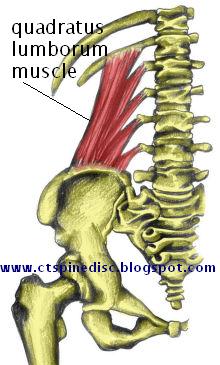
quadratus lumborum is one muscle is one muscle that can be the cause of lower back painMost have some tightness or spasm or maybe trigger points in the lower back musculature, but everyone is a little different. It might be tightness in the quadratrus lumborum, spasm of the paraspinals or knots in the gluteus medius.

As far as tightness goes for one specific muscle, the answer is hamstrings. Always keep in mind that the whole body works together and everything attaches. The calves attach to the hamstrings, the hamstring muscles to the gluteus muscles, and the gluts to the lower back.


Keeping the leg muscles loose is extremely helpful in restoring the low back’s function. The hamstrings are one of the biggest and most powerful muscles in the body. Stretching them on a regular basis will help your back. And now you know; if you are suffering from back pain, chances are you have some tightness in your hamstrings.


Picture Source: Meet the quadratus lumborum

Additional Reading Resources

Saturday, December 12, 2009

The Differences In Various Lumber Disc Conditions…

Lumbar MRI showing normal study and a herniated disc I often have patients that bring in their MRI report page with a very confused look on their face. Doctor- can you tell me what this word means?

The lumbar spine consists of five vertebrae or spinal segments. Between each segment is a disc. This disc acts as a shock absorber so we can do things like: run, jump, twist, and lift. It also acts as a spacer between segments forming a hole between spinal vertebrae. L1 refers to Lumbar 1, L2- Lumbar2, and so on. There is an L1 to L5, then you hit the sacrum which is often referred to as S1.

Disc problems are often classified into one or more of the following conditions:

  • Disc Degeneration- this is age related breakdown of the disc. This is often synonymous with disc desiccation and is accompanied with fibrosis and osteophyte formation of adjacent vertebrae.

  • Disc Desiccation- a disc that has fibrosed or hardened due to loss of water content. You see the disc is made up of an annulus (outer fibers which are slightly harder), then the inner nucleus which is more of a gel-like material.


  • An annular tear refers to any disruption in the outer disc fibers. Besides a tear you can also have a rupture of the annulus fibrosis. The annulus is the outer ring of the disc.

  • When someone has a herniated disc they have disc material that has broken out through the annulus. The nucleus pulposis is displaced beyond the margins of the vertebrae.

  • Next is a Disc Protrusion- It is basically another name for a herniated disc. There are two types; focal disc protrusions or broad based disc protrusions. Focal is when the disc protrusion is less than 25% of the disc circumference. A broad based protrusion is when the disk protrusion encompasses 25-50% of the disc circumference.


  • When the disc that has herniated out is more wide than it is long (meaning how far it is reaching outward) it is a Protruding Disc vs. the next definition.


  • Extruded Disc- this means the disc has come outward further than it is wide. Extruded discs can also be classified as sequestered or migrated discs.


  • Sequestered disc- Also called a migrated disc, is when that extrusion breaks free from its connection to the rest of the disc material and is now a free fragment or “fragmented disc.”

Additional Reading Resources


CT Spine and Disc Center is located in central Connecticut- Specializing in patients who suffer from sciatica, disc degeneration, bulging disc or herniated disc in the lumbar spine. Call us at 860-633-8756 to see if you are a candidate for non surgical spinal decompression

Wednesday, July 29, 2009

How can Stress affect my Back?

How Does Stress Affect  Your Pain?
Stress is the response your body has to certain experiences. This response can be mental, physical, or both.

Stress tends to disrupt your body’s normal physiologic equilibrium (homeostasis). If your low back tends to be your weak area (sometimes you know it, sometimes you don’t) stress will often cause low back pain.

Speak to your chiropractor about ways to relieve stress, it can be vital to keep your body healthy and your back pain-free.


CT Spine and Disc Center is located in central Connecticut- Specializing in patients who suffer from sciatica, disc degeneration, bulging disc or herniated disc in the lumbar spine. Call us at 860-633-8756 to see if you are a candidate for non surgical spinal decompression

Additional Reading Resources:

Tuesday, June 9, 2009

Dear Doctor, I have Butt and Leg Pain. Can you Help me?

The lower nerve roots form together to create the sciatic nerve which travels down near your sacrum (or tailbone region) and exits out the buttock on each side and sends nerve innervation to the legs
Pain starts in my left rear-end and travels down my leg. Sometimes I even get numbness. I don’t really have much back pain. Is it back-related?

Over and over we see patients with pain in the legs and buttocks or numbness and tingling in the legs, but no back pain. Most often the problem still comes from the lower back.

The reason is that nerves have specific referral patterns, measuring pressure on one part of the nerve may refer or send symptoms to another area.

In the low back the lower nerve roots form together to create your sciatic nerve which travels down near your sacrum (or tailbone region) and exits out the buttock on each side and sends nerve innervation to the legs.

Depending where the pressure is and how severe it is will determine your symptoms. The nerve roots that branch off the spinal cord are a bundle of nerves; depending which fibers in those nerve roots are irritated will determine where your symptoms may occur- leg pain, foot numbness, back pain, shooting pain down the leg starting at the base of your rear-end, muscle cramping in your calves. . .

Some symptoms are more common for certain conditions or a disc problem at a specific level often causes similar symptoms. This is specifically why we do specific exam tests or lab tests, or take pictures of the spine and/or discs.

So, to answer your question in the title- the answer is often: yes! However, our consultation and exam with you will give us a clear yes or no.

If you suffer with symptoms in your lower extremity such as leg pain and tingling/numbness in the legs, call our office for a free, no obligation consultation right away.

CT Spine and Disc Center is located in Glastonbury, CT- Serving patients in central CT and MA. If you suffer from sciatica, disc degeneration, bulging disc or herniated disc in the lumbar spine, we can help you. Call us at 860-633-8756 to see if you are a candidate for non surgical spinal decompression.

Additional Reading Resources:

Saturday, April 18, 2009

Is Your Lower Back Pain Or Leg Pain The Result Of A Lumbar Radiculopathy?

A lumbar radiculopathy may cause pain into the leg along with numbness and tinglingSevere Lower Back Pain Or Leg Pain may be the Result Of A Lumbar Radiculopathy. Patients who present with lower back pain that is radiating into their legs and feet may be diagnosed with a lumbar radiculopathy. A lumbar radiculopathy includes anything that causes irritation, compression or dysfunction of one or more of the lumbar (low back) nerves. The lumbar nerve roots are sensitive to any type of irritation or pressure- and can cause those nerve roots to not function properly. The general term we often use for a lumbar radiculopathy is Sciatica.


What goes on at the nerve root level in the low back can cause many different symptoms? Any type of irritation to the nerve root can cause inflammation which can then cause back pain. Believe it or not, pressing on a nerve may not cause pain, or at least pain right away, but it will cause neurological deficits at some level.

The lumbar nerve roots have sensory, motor, and reflex components. When we say compression of a nerve root could cause neurological deficits, the sensory, motor or reflex component may be affected. Each nerve in the low back controls certain muscles and certain sensations and reflexes in areas of the low back, buttocks and legs.

Radiculopathy can be caused by different things- and often times it is important to distinguish a radiculopathy from other conditions such as spinal cord lesion or a severe muscle strain.

To diagnose a radiculopathy, it is important to have a proper history and consultation with your Doctor. What caused this pain? What is the pain level? Does the back pain travel into the legs? Does the pain cause numbness and tingling anywhere? Your doctor will determine what level the radiculopathy is taking place by looking at sensory changes such as feeling altered sensations or tingling, decreased or absent reflexes, and weakness in certain muscles. This goes back to looking at the sensory, motor and reflex aspect of each lumbar nerve root. So the first step in understanding a lumbar radiculopathy, is to see your doctor for a proper consultation, history and examination. You may also be sent out for specific imaging studies such as a lumbar MRI.

I will discuss more about specific details about what can cause a radiculopathy, what symptoms present at certain levels and how to treat this type of back pain or sciatica in the next couple blog posts. If you have specific questions about a lumbar radiculopathy or sciatica or have tried various treatments with no real success, call our office at 860-633-8756 to find out if we may be able to help.


CT Spine and Disc Center is located in central Connecticut- Specializing in patients who suffer from sciatica, disc degeneration, bulging disc or herniated disc in the lumbar spine. Call us at 860-633-8756 to see if you are a candidate for non surgical spinal decompression

Additional Resources:

Tuesday, March 10, 2009

Can My Back Be Causing More than Just Back or Leg Pain?

Yes, low back pain can often cause leg pain. Nerves in the low back not only communicate to your back and leg muscles but also go to the important parts of your body like you bladder, intestines, sexual organs, etc...And if pressure continues to accumulate on nerves or a nerve other problems often do start to happen.

Think of it like this – if you have extra pressure on the nerves traveling to your right kidney and nothing interfering with nerves traveling to your right kidney and nothing interfering with nerves to the left kidney, which one do your think will be working better?

This is the reason why keeping your nerves free of pressure is extremely important, one day it may be back pain, the next it could be something much worse.

Second, when your body is working to heal your back other parts of the body often pick up the slack. Remember the kidney example I just gave – the left kidney will have to pick up the slack for the right kidney. This can then lead to problems there other parts of the body as a result.

Lastly, dealing with pain can wear you out mentally, maybe causing depression, loss of sleep, fatigue, irritability… It’s is usually a downward spiral of things just getting worse..And all because of your back.

If you have back pain or know you have degeneration and pressure on the nerves of the low back, don’t wait until its too late.

CT Spine and Disc Center is located in central Connecticut- Specializing in patients who suffer from sciatica, disc degeneration, bulging disc or herniated disc in the lumbar spine. Call us at 860-633-8756 to see if you are a candidate for non surgical spinal decompression

Additional Reading Resources:

Friday, February 6, 2009

Oh, My Aching…Leg?

Eliminate Back And Leg Pain With Spinal Decompression And Advanced Chiropractic Care
Certain low back conditions give rise to more than just low back pain. For example, leg pain can be more intense than low back pain, even though the cause of the leg pain is coming from the low back. When this happens, many patients complain that they have “sciatica,” which refers to radiating pain that starts in the low back and extends down into the leg. When the intensity of leg pain is worse than the low back, it can make patients wonder, “…where is my problem really coming from?”

To understand this better, a short “anatomy lesson” is appropriate. The spine can be divided into two halves, front and back. The structures in the front half include the larger, heavier bones called vertebral bodies and the shock absorbing cushions that lie between the vertebral bodies called the intervertebral disks. The disk is like a jelly donut where the center is liquid-like and the outer portion is a tough, criss-cross pattern cartilage arranged like the rings on a tree stump. There are also ligaments that hold the vertebrae and disks tightly together. The back half of the spine includes the spinal cord, nerve roots, as well as the small joints of the back called facet joints. Every movable joint has a joint capsule that helps lubricate the joint and limits the amount of movement, along with surrounding ligaments. The larger, heavier vertebral bodies and shock absorbing disks carry the majority of the weight (approximately 80%) while the smaller facet joints carry much less weight (only 20%) but are more responsible for guiding the movements of our back.

When leg pain is present, it can be caused by either a pinched nerve, or, an inflamed facet joint.

When a nerve is pinched, the cause is usually from the intervertebral disk where the jelly-like center leaks out and presses on the nerve that goes down the leg, commonly referred to as a “herniated disk with sciatica.” This type of pain is quite specific, easy to describe and often extends below the knee to the ankle or foot. It can include muscle weakness, numbness in certain areas of the leg, and bending forward increases low back and leg pain while bending backwards reduces the leg pain (and sometimes the LBP).

When a facet joint capsule tears (technically, called a “sprain”), the pain is “referred” down the leg in a generalized, non-specific manner, usually described as a “deep ache,” often hard to describe and usually does not go below the level of the knee. Here, it feels better to bend forward and worse to bend backwards, of which neither movement changes or affects the leg in a specific way. Disk related leg pain carries a potential for surgery if all non-surgical approaches fail, while facet joint referred leg pain rarely requires invasive treatments or surgery.

The good news is that both of these sources of low back and leg pain are very treatable with DRX9000 Non-Surgical Spinal Decompression or Chiropractic care! The important point to remember is that obtaining prompt treatment, when symptoms first appear is best – as waiting and hoping it will subside on its own often results in a longer treatment course and is less satisfying for all concerned.

YOU MAYBE A CANDIDATE FOR DRUG FREE RELIEF!

FOR A FREE NO-OBLIGATION CONSULTATION CALL 633-8756.

Friday, December 19, 2008

Low Back Pain (…or is it?)

Have you ever had leg pain and immediately blamed your low back? Me too! Many patients (and unfortunately, many doctors) conclude this to be “sciatica” or a “pinched nerve.” When this diagnosis is wrong, it can lead to an inappropriate type of treatment, delaying appropriate care, or worse, it may result in death due to a missed diagnosis of a blood clot. There is currently a government campaign seeking to warn the public about this hard-to-diagnose 'silent killer.' Leg Pain - Is It Your Back?


Here’s the news flash that was recently released (updated 8:28 a.m. CT, Mon., Sept. 15, 2008): “WASHINGTON - Far too many Americans are dying of dangerous blood clots that can masquerade as simple leg pain, says a major new government effort to get both patients and their doctors to recognize the emergency in time.”

"It's a silent killer. It's hard to diagnose," said acting Surgeon General Dr. Steven Galson, who announced the new campaign Monday. "I don't think most people understand that this is a serious medical problem or what can be done to prevent it."


Blood clots make headlines when seemingly healthy people collapse after prolonged sitting, such as long airplane flights or being in similarly cramped quarters. Vice President Cheney suffered one after a long trip last year. NBC correspondent David Bloom died of one in 2003 after spending days inside a tank while covering the Iraq invasion.

According to the Surgeon General’s new campaign, there are about 100,000 deaths associated with blood clots each year. Risk factors include increasing age (especially over 65), recent surgery or fracture, falls, car crashes, prolonged bed rest, smokers, obesity, pregnancy, and hormone replacement drugs including birth control pills. Other less controllable causes can include genetic conditions so it is important to tell your doctor if a relative has ever suffered a blood clot.

People with these factors should have "a very low threshold" for calling a doctor or even going to the emergency room if they have symptoms of a clot, said Galson, who issued a "call to action" for better education of both consumers and doctors, plus more research.

Symptoms include swelling; pain, especially in the calf; or a warm spot or red or discolored skin on the leg; shortness of breath or pain when breathing deeply. Unfortunately, studies suggest only a third of patients who need protective blood thinners for major surgery get them. And patients can even be turned away despite telltale symptoms, like what happened to Le Keisha Ruffin just weeks after the birth of her daughter, Caitlyn. In her case, after being turned down by several visits to the doctor and ER, only after a very hot bath did her leg swell to 3-4 times its normal size, tipping off the doctors to make the right diagnosis.

Don’t wait for your medical doctor or our office to make the diagnosis if you’re suspicious of a blood clot. Ask us if it’s a possibility. Rest assured that we have been properly trained to diagnose this condition and we work with other health care providers when needed.

YOU MAY BE A CANDIDATE FOR DRUG FREE RELIEF!
FOR A FREE NO-OBLIGATION CONSULTATION CALL 633-8756

Monday, October 20, 2008

Getting Rid Of The Trigger Points In Your Lower Back Can Help Relieve Lower Back Pain.

Trigger points are knots in the muscle that can often be sore or painful. When they are present the muscles of the low back become more rigid and tight, causing more pressure and inflammation to accumulate on the nerves. This in turn can make your back or leg pain worse.

Most consistently the trigger points we find in people’s backs are in the lower back on each side of the spine just above the pelvis.

The reason we get these trigger points in the back, to begin with, can be from a lower back strain, past injury, or disc herniation, that puts pressure on the nerves.
If there is pressure on nerves going to the muscles of your low back, these muscles don’t get 100% of the information being sent to them. This causes muscle imbalances, tightness or trigger points.

If it’s a strain or misalignment of the spine creating the nerve pressure, chiropractic care can help relieve the pressure and therefore the trigger points in your back. Whether the cause of the nerve pressure is from a herniated disc or degenerative disc, the best option is Drx9000 spinal decompression.

In the mean time to help relieve some pressure temporarily there are ways of decreasing those trigger points. I can show you a quick way to help. With a little practice you can reach around to your low back and feel the trigger points. I say “a little practice” because it may take a couple times to realize what and where those trigger points are.

It will feel like a hard ball of muscle and it will move slightly when you press on it.

Once you find the, the best way to help loosen the muscular trigger points is to press on them and hold for 5-10 seconds. Repeat this action 1-3 times. You will notice that the trigger point gets smaller and harder to stay on. You may notice it breaking up under your fingers as well. If you are having trouble locating the trigger points it sometimes helps to bend slightly forward. This pushes the muscle more to the surface.

The muscle fibers should be smooth when they are knotted up it not only causes muscle tension, but it will create more pressure on nerves and more pain. Breaking up those trigger points will help relieve your pain.

Friday, February 29, 2008

"Why Does Every Dr I See Tell me There's Nothing Wrong When I Have Major Back & Leg Pain "

"I've been through multiple tests - XRays, MRI's of my entire spine, blood work, nerve tests and more".

"Every doctor says there's nothing wrong but I have severe back pain and leg pain too. What could it be and what do I do? I can't deal with this pain any longer!"

Sound familiar?...Many times there can be a low back disc issue creating the pain or problem that doesn't get properly diagnosed and caught!

I see many patients who come in with degeneration in the spine and alot of lower back pain or leg symptoms.

Degeneration is sometimes enough to create major presssure on the nerves which gives you back pain, leg pain, tingling and numbness, or something worse.


When the disc degenerates it will flatten and bulge. This flattening will leave less room for the nerve to exit off of the spinal cord and communicate to the low back, hips, legs, and the muscles in these region.

Degeneration may not always be taken seriously because over time most people will get some degeneration or arthritis as they get older!...When, in fact, depending where that degeneration is exactly, and what nerves it puts pressure on, can determine what symptoms may occur - back pain, muscle stiffness or spasm, leg or foot pain, etc...

So remember, if you have pain then it's not normal and most likely may get worse! You may be a candidate for non-surgical spinal decompression.Call CT Spine and Disc Center to see if you will be a candidate for our treatment at 860-633-8756

Friday, September 21, 2007

What is Sciatica?

Sciatica is low back/buttocks and leg pain. Basically your sciatic nerve is formed form nerve roots in the lower spine that come together to create the sciatic nerve. This nerve travels down the legs giving off multiple branches which supply and control our legs, knees, ankles, feet, etc…
The sciatic nerve exits out an area in the buttocks next to the piriformis muscle which is why people with sciatica can often have pain in the buttocks region. It then travels down the leg. Depending exactly on the severity of pressure and what nerve fibers are effected one may have pain in the leg but often can get other symptoms such as burning, numbness and tingling, or even weakness.

LinkWithin

Blog Widget by LinkWithin