
Showing posts with label chronic pain. Show all posts

Sunday, January 27, 2013

Chronic Pain Sufferers – be careful of drug dependency with medications

Chronic Pain can be something that affects our activities of daily living. Too many times patients will go to their primary care doctor looking for a quick fix: medications.

Where does chronic pain stem from? It can stem from conditions such as a pinched nerve, arthritis, a herniated disc, headaches or even muscle aches.

Recently in the news, the The American Society of Anesthesiologists issued a warning stating that patients need to be careful about taking pain medications for chronic conditions. Specifically: Opoid pain medications- which are highly addictive. We read about this with celebrities all the time, but what about real life?

There are a lot of side effects that can happen with using opoid pain medications for long term. Using these pain medications affects us the spinal nerve levels- making the drug more potent which leads to addiction for the pain medication.

Alternative treatment options should be researched and opted for when available. Other treatments may include medical management, chiropractic, acupuncture, physical therapy and psychological therapy, to other interventional therapies and other alternative medical treatments.

Source: Chronic pain sufferers urged to seek safe relief from pain physicians

Image Source: Jascires

The Glastonbury Chiropractor is located in central Connecticut- CT Spine and Disc Center specializes in patients who suffer from sciatica, disc degeneration, bulging disc or herniated disc in the lumbar spine. Call our chiropractic office at 860-633-8756 to schedule an appointment and to see if you are a candidate for non surgical spinal decompression

Additional Reading Resources:


Tuesday, November 3, 2009

What Does It Mean To Have FibroMyalgia?

Today’s blog post comes from Dr. Bellinger’s November Newsletter.

At my Glastonbury CT office, I often see patients who have been diagnosed with fibromyalgia. Fibromyalgia is not a condition that you can say has a specific cause with a clear origin and means of diagnosis. It is one of those conditions that are obscure and can only be diagnosed by eliminating other, more common conditions. Fibromyalgia is one of those conditions where the degree of pain and disability can be profound and life quality interrupting, yet all the tests come back negative and there are no other conditions to explain the collection of symptoms. It is at that point when the diagnosis of fibromyalgia is typically made.

Fibromyalgia is typically a chronic (symptoms have been present for at least 3 months) condition where the patient complains of widespread, generalized muscle, ligament and tendon pain accompanied with fatigue and multiple tender points on the body that hurt with only light pressure. To be considered “widespread,” it usually affects both sides of the body and is both above and below the waist. It occurs in approximately 2% of the population in the US and women are 3-4 times more likely to develop fibromyalgia. The risk of fibromyalgia increases with age and can be secondary to other physical or emotional trauma, or it can occur all by itself. No obvious pattern usually exists as signs and symptoms can vary depending on weather, stress, physical activity, and even the time of day.

Sleep quality is an issue that seems well agreed upon as regardless of the number of hours in bed, the deep, restorative stages of sleep are seldom reached. Other sleep disorders frequently associated with fibromyalgia include sleep apnea and restless leg syndrome.. “central sensitization”. This is basically a low threshold for pain because of increased sensitivity in the brain to the incoming pain signals. Certain chemical (neurotransmitters) changes in the brain have been identified resulting is hypersensitivity creating an overreaction to pain signals.

The American College of Rheumatology has established two diagnostic criteria that include
  1. widespread pain lasting at least 3 months
  2. at least 11 out of 18 positive tender points using just enough pressure to whiten the fingernail bed.
What are these 18 tender points that have been identified?

Tender Points seen in Fibromyalgia patients


  1. Lower neck in front (2)
  2. Edge of upper breast bone (2)
  3. 2 cms below side bone at elbow (2)
  4. Just above knee on inside (2)
  5. Attachment of neck muscles at the base of the skull (2)
  6. Midway between neck and shoulder (2)
  7. Muscle over upper inner shoulder (2)
  8. Upper outer buttock (2)
  9. Hip bone (2)
There are no direct blood tests to confirm a diagnosis of fibromyalgia but other conditions can affect or cause Fibromyalgia can be diagnosed with blood testing. These include:

Saturday, February 14, 2009

Chronic Low Back Pain Is On The Rise…What Are Your Treatment Options?

Chronic Lower Back Pain Is on the RiseA new research study by Dr.Timothy Carey, a Professor of Medicine at the University of North Carolina reveals that chronic lower back pain may be increasing. This statistic was found in North Carolina and is being extrapolated for the entire USA.

Dr. Carey’s team discovered that the cost of treating chronic low back pain has not only increased, but that patients are simply seeking more services and treatment. Also they found that the number of people who suffer from long term lower back pain is increasing.

According to the study, 3.9 percent of North Carolina residents surveyed in 1992 said that they had debilitating, chronic back pain. That number rose to 10.2 percent by 2006, the researchers said.

Among people reporting ongoing, serious low back pain in 1992, about 73 percent said they had seen a physician, physical therapist or chiropractor at least once during the past year. In 2006, 84 percent said they had done so. However, the average number of health care visits remained the same, at just 19 a year.

The fraction of people with back pain who had ever had back surgery increased only slightly, from 22.3 percent in 1992 to 24.8 percent in 2006. Although the study’s aim was not to determine the cause of lower back pain, they ascertained that obesity and depression do play a role as well.

They point out that the cost of chronic lower back pain is a loss in productivity among workers, to the tune of $100 billion dollars a year. Dr. Carey states that “In one sense, we're all paying for back pain. It ends up being reflected in our health insurance premiums and our Social Security disability costs”

Also, lower back pain causes impairment. The National Health Interview Survey showed that neck and lower back pain increased from 3.2% in 1997 to 8.8% in 2006.

The findings also raise questions as to the effectiveness of current back pain treatments, Carey said. For example, another recent study he participated in showed that exercise remains underutilized as a means of treating chronic back and neck pain, though numerous studies show it can be effective.

A University of Washington health services researcher, Brook Martin, who specializes in studying spinal services, agrees that a doubling of chronic back pain over 14 years raises serious issues about current treatment approaches. "It makes us have to think about how to approach back pain," Martin said. "Chronic care models and clinical protocols and guidelines are not really the standard in treating back pain. This kind of highlights that this might be a real need."

In the February 2009 Issue of Connecticut Magazine, Margaret Farley Steele discusses the latest treatments for chronic lower back pain.

According the National Institutes of Health, lower back pain is the #1 reason why Americans seek medical attention, followed by headaches as the #2 reason.

In her article Steele talks with many medical professionals about the different treatments available for chronic lower back pain, including:


  • Having a neurostimulator implanted in the abdomen that provides a low wattage electrical stimulation through leads to the lower back area (lumbar spine). Dr.Loyd Saberski, of the Pain Treatment Centers of New Haven explains that the “burden is on the patient” when it comes to finding relief. Dr.Saberski also notes that anemia and depression also need to be treated. He also treats with physical therapy, and nutrition among more common treatments such as pain injections.
  • At the Orthopaedic and Sports Medicene Center in Trumbull CT, Dr. Gerald Girasole offers Physical Therapy and non steroidal anti-inflammatory medication. He states that if patients don’t find relief, they are referred out for a lumbar MRI and surgery is considered
  • Dr. Edward Hargus, a pain management specialist in Norwich states that most patients that experience Low Back Pain will get better in 6-8 weeks. He states that “ I see bigger and bigger back operations and poorer results all the time” He further states that stress can aggravate a chronic pain problem.
  • Dr. Matthew Bellinger, a chiropractor in Glastonbury uses non surgical spinal decompression at the CT Spine and Disc Center. These treatments take 4-6 weeks and help to rehydrate the discs in the lumbar spine.
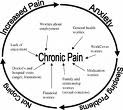
The Chronic Pain Cycle Involves Bouts of Anxiety and DepressionSteele goes on to reveal that with all these different treatment approaches the state of Connecticut received a “B” grade in regards to pain policies set by the University of Wisconsin’s Pain and Policy Studies Group. “The researchers examined how well a state restricted unlawful use of medications while making them available for patients needing them, and they looked for pain-management training guidelines.

With the advent of technology new treatments for lower back pain are coming out everyday. Yes, chronic lower back pain is a real problem, one that we must continue to research everyday.

Sources:


Additional Reading Resources:

LinkWithin

Blog Widget by LinkWithin