Showing posts with label bulging disc. Show all posts

Wednesday, October 11, 2017

"I Apparently Have Some Bulging Discs, But No Pain?"

This is very good but doesn't mean you should ignore them. If you have discs that are bulging or protruding, it can be a sign that there is breakdown.

Probably one of the best things to do is get your spine checked by the Chiropractor. They can tell you if something really out of alignment and needs lining up. Keep in mind, that a healthy, in aligned spine, holds the discs in place better.

You may also be able to tell if your spine is way off line by looking at your posture.


The Back Dr’s specializes in pain relief for the neck and the lower back. We will help you have better posture, get better sleep and help you be more comfortable. Helping you find natural remedies for your active lifestyle.

Additional Reading Resources:


Like The Glastonbury Chiropractor on Facebook

The Back Store: Cushions, Belts, Pillows, Tens, Hot and Cold Therapy and More | You Tube The Glastonbury Chiropractor

Wednesday, March 8, 2017

"Why Can A Bad Disc Be Such A Problem?"

Really, the first question is what is a "bad disc"? We would be referring a disk that is causing a problem or that is not like the others and putting unwanted pressure on nerves.

It depends on where that nerve pressure is that tells us what symptom we're going to have such as pain, or maybe tingling and numbness, and and where that pain it is, and how severe it can be.

Also, because where the disc lies and correlation to where the nerves or nerve roots come out of the spine makes it common for a herniated, bulged, or degenerated disc, to cause some major nerve pressure.

The Back Dr’s specializes in pain relief for the neck and the lower back. We will help you have better posture, get better sleep and help you be more comfortable. Helping you find natural remedies for your active lifestyle.

Additional Reading Resources:


Like The Glastonbury Chiropractor on Facebook

The Back Store: Cushions, Belts, Pillows, Tens, Hot and Cold Therapy and More | You Tube The Glastonbury Chiropractor

Saturday, November 6, 2010

Chiropractic Care Can Help Lumbar Radiculopathy!

The following is a copy of an article from Mark Studin DC, FASBE (C), DAAPM, DAAMLP. It shows the latest research on chiropractic care for treating disc pain.

Back and Leg Pain (Lumbar Radiculopathy) as a Result of Disc Herniation and the Long Term Effect of Chiropractic Care

The term "herniated disc," has been called many things from a slipped disc to a bulging disc to a ruptured disc. To a doctor who specializes in disc problems, the term is critical because it tells them how to create a prognosis and subsequent treatment plan for their patient. To clarify the disc issue, a herniated disc is where a disc tears and the internal material of the disc, called the nucleus pulposis extends through that tear and is always from trauma, or an accident. This differs from a bulging disc that is a degenerative "wear and tear" phenomenon where the internal material or nucleus pulposis does not extend through the disc because there has been no tear, but the walls of the disc have been thinned from degeneration and the internal disc material create pressure with thinned external walls and the disc itself "spreads out" or bulges..

There are various forms and degrees of disc issues, but the biggest concern of the specialist is whether nerves are being affected that can cause significant pain or other problems. The problem exists when the disc, as a result of a herniation or bulge is touching or compressing those neurological elements, which is comprised of either the spinal cord, the nerve root (a nerve the extends from the spinal cord) or the covering of the nerves, called the thecal sac.

There are 2 concerns that doctors consider, first is the structure that we have just discussed and the second is what has the herniation of the neurological element caused. In this scenario, there are 2 problems, the spinal cord or nerve root. If the disc has compromised the spinal cord, it is called a myelopathy (my-e-lo-pathy) where you have a compression of the spinal cord and problems with your arms or legs and an immediate visit to the neurosurgeon is warranted for a surgical consultation.

The second problem is when the disc is effecting the spinal nerve root, called a radiculopathy and is a very common problem. A doctor of chiropractic experienced in treating radiculopathy has to determine if there is enough room between the disc and the nerve in order to determine if a surgical consultation is warranted or if they can safely treat you. This is done by a thorough clinical examination and in many cases an MRI is required to make a final diagnosis. Most patients do not need a surgical consultation and can be safely treated by an experienced chiropractor.

While herniations can occur anywhere, it was reported in the US Chiropractic Directory in 2010 that 95% occur in the lower back, who stated "The highest prevalence of herniated lumbar discs is among people aged 30–50 years, with a male to female ratio of 2:1. In people aged 25–55 years, about 95% of herniated discs occur at the lower lumbar spine (L4/5 and L5/S1 level); disc herniation above this level is more common in people aged over 55 years."

It was reported by Aspegren and co-researchers in 2009 that 80% of the chiropractic patients studied with both neck and low back (cervical and lumbar) disc herniations had a good clinical outcome with post-care visual analog scores under 2 [0 to 10 with 0 being no pain and 10 being the worst pain imaginable] and resolution of abnormal clinical examination findings. Anatomically, after repeat MRI scans, 63% of the patients studied revealed a reduced size or completely resorbed disc herniation.

A study by Murphy, Hurwitz and McGovern in 2009 focused only on low back (lumbar) disc herniations and concluded that "nearly 90% of chiropractic patients reported their outcomes to be either "excellent or good...with clinically meaningful improvement n pain intensity in 74% of patients." The researchers also concluded that the improvements from chiropractic care was maintained for 14 1/2 months, the length of the study indicating this isn't a temporary, but a long-term solution.

It was reported in Journal Manipulative Physiological Therapy 1996 that 78% percent of the low back-lumbar disc herniation patients were able to return to work in their pre-disability occupations, which is the result of the 90% of all low back-lumbar disc herniation patients getting better with chiropractic care as discussed above.

These are the reasons that chiropractic has been, and needs to be considered for the primary care for low back-lumbar disc herniations with resultant pain in the back or legs. This study, along with many others concludes that a drug-free approach of chiropractic care is one of the best solutions to herniated discs and low back or leg pain. To find a qualified doctor of chiropractic near you, go to the US Chiropractic Directory at www.USChiroDirectory.com and search your state.


References:


1. http://www.uschirodirectory.com/index.php/patient-information/item/242-cervical-and-lumbar-disc-herniations-and-chiropractic-care

2. Donald Aspegren, DC, MS, Brian A. Enebo, DC, PhD, Matt Miller, MD, Linda White, MD, Venu Akuthota, MD, Thomas E. Hyde, DC, and James M. Cox, DC. Functional Scores and Subjective Responses of Injured Workers with Back or Neck Pain Treated with Chiropractic Care in an Integrative Program: A Prospective Analysis of 100 Cases, Journal Manipulative Physiological Therapy 2009;32:765-771

3. Magnetic Resonance Imaging and Clinical Follow-Up: Study of 27 Patients Receiving Chiropractic Care for Cervical and Lumbar Disc Herniations. Journal Manipulative Physiological Therapy, 1996 Nov-Dec; 19(9): 597-606

4. Murphy D R, Hurwitz E L, McGovern E E, A Nonsurgical Approach to the Management of Patients with Lumbar Radiculopathy Secondary to Herniated Disc: A Prospective Observational Cohert Study with Follow-Up, . Journal Manipulative Physiological Therapy, 2009, November (32) 9: 723-733


The Glastonbury Chiropractor is located in central Connecticut- CT Spine and Disc Center specializes in patients who suffer from sciatica, disc degeneration, bulging disc or herniated disc in the lumbar spine. Call our chiropractic office at 860-633-8756 to schedule an appointment and to see if you are a candidate for non surgical spinal decompressionAdditional Reading Resources:

Saturday, July 4, 2009

I get pain when its bad weather outside, does that make any sense?

A 2007 study by Tufts University showed that an increase in barometric pressure or an decrease in temperature caused an increase in arthritis pain…“the pain I experience in my neck and mid back are worse with the changing weather”. This is something I hear quite a few times from patients. In fact, some of my patients even let me know when a rain storm or snow storm is coming! They can “feel” it in their joints. Why does this happen, you ask?

When this occurs it tends to put more pressure on your spine and discs. This is why it is very common for our patients with herniated discs or bulged or degenerative discs to feel slightly worse on these days. It’s much like gravity putting slightly more pressure down on you. A 2007 study by Tufts University showed that an increase in barometric pressure or an decrease in temperature caused an increase in arthritis pain. Specifically, every 10-degree drop in temperature corresponded with an incremental increase in arthritis pain. Other studies in cadavers have found that barometric pressure affects pressure inside the joints. In one experiment, when pressure in the hip joints was equated with atmospheric pressure, it threw the ball of the hip joint about one-third of an inch off track.

Gravity pushes down, and your spine and discs are built to withstand these forces. But when a disc is injured (a disc tear, a bulged disc, etc . . .) or the spine is out of alignment (subluxations, scoliosis, and degenerative change) this extra pressure can be noticeable.

Keep your spine and discs healthy with spinal adjustments and DRX 9000 spinal decompression therapy by your chiropractor.

CT Spine and Disc Center is located in central Connecticut- Specializing in patients who suffer from sciatica, disc degeneration, bulging disc or herniated disc in the lumbar spine. Our Glastonbury office helps you find lower back pain relief. Call us at 860-633-8756 to see if you are a candidate for non surgical spinal decompression

Additional Reading Resources:

Tuesday, May 5, 2009

What tests will my doctor do to help determine what’s wrong with my back?

First, your doctor or chiropractor will ask you about your pain. Things like how long it’s been going on, was there an incident that started it up, where is it located, how much back pain (or leg pain or foot tingling etc…) is there and how often is it, does it travel, what medications for your back pain are you taking, etc.

Next, a thorough exam needs to be performed. This should include specific tests to determine the nature and cause of the problem. For your back, it should include observatory and palpatory findings, ranges of motion, orthopedic testing and neurological testing.

A lumbar MRI Shows us what is going on at the disc level


Then any advanced testing and/or imaging should be performed and/or reviewed. This will include things like MRI’s, x-rays, CT scans, discograms, nerve conductions, EMG’s, bone scans, or blood work, to name some.

Last, all of these findings need to be correlated together. It is not enough to simply look at an MRI without doing an adequate consultation, or simply doing a consultation with no real exam. It sounds like common sense, but inadequate consultations, exams, and testing happens everyday.

Without the proper testing an individual will not get the correct diagnosis, and without the correct diagnosis, the patient will often not get the care he/she needs.

Located in Glastonbury, Connecticut CT Spine and Disc Center Specializes in patients who suffer from sciatica, disc degeneration, bulging disc or herniated disc in the lumbar spine. Call us at 860-633-8756 to see if you are a candidate for non surgical spinal decompression

Additional Reading Resources:

Thursday, November 13, 2008

The Common Answers To Solving Back Pain From a Herniated Or Bulging Disc...And Why They Almost Never Really Work!

Until recently, the only advice for many of you suffering with back pain was to try the following:

-Try Exercises
-Try Physical Therapy Discover A New Breakthrough Treatment For Back Pain That Really Works!
-Try These Pain Medications
-Try Muscle Relaxers
-Try Pain Shots Or An Epidural
-Try Risky/Dangerous Back Surgery
-Try To Live With The Pain

If you're like most, none of these have actually worked for you or you are afraid of what could happen if you do try some of these.

Exercising or exercises at PT makes your pain worse. The muscle relaxers or pain meds just cover the problem up, give you side effects, and only give short term relief.

Pain shots are scary, made things worse, didn't work, didn't last, had side effects as well, and really did nothing to fix the cause of the problem.

Back surgery, if you had it, gave you one of the following outcomes: it made you worse, it din't work, or it actually did help but now your pain has returned worse than ever.

Now there's finally an answer to your low back pain that Does Work!


Whatever your situation, you owe it to yourself to check into this new breakthrough treatment, right here in the Hartford area of Connecticut.

Thursday, October 30, 2008

Herniated Or Bulging Disc? Get Help Before It's Too Late!

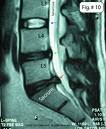
Herniation at the last spinal level, Disc Bulge at the level above that.

At CT Spine And Disc Center we take Disc Herniations and Bulging Discs very seriously. These conditions usually do not get better on their own and typically get Worse!

Disc Herniation

To help understand your spine and discs think of your discs as jely donuts. Between each bone of the spine you have one. The discs allow us to move, run, jump, and ack as a shock absorber.

When the disc gets injured (the donut), the jelly breaks free from the crust. So in other words when we have a herniation or protrusion of the disc, the inner gel like material breaks through the outer fibers.

Now, if you squish a donut and all the jelly pushes to one side, the donut will bulge there. So a bulged disc is when the inner material pushes on the outer fibers bulging them outward but not breaking all the way through like a herniation.

Why are these conditions serious?

When you have a disc herniation or bulge your disc space is now smaller; and this decreasses the space your nerve root has as it branches off the spinal cord. Also, the bulge or herniated disc can literally put direct pressure on a nerve.

Remember, different nerve fibers detect and relay pain differently, so you can have a disc problem and not necessarily have that much pain.......Yet, Anyway!

The problem is - If pressure is left on the nerve, the nerve will start to break down or degenerate. The disc will also degenerate as well. Eventually because of this we will now get pain, more pain, or even worse...

The nerves of your lower back also travel to your legs, important body parts like your bladder, intestines, your sexual organs. So if left alone and nothing is done to heal a herniated disc or bulged disc, the pain...and other health problems can and will occur.

If the disc and nerve degeneration get too far along we may not be able to help!


Now, with our DRX9000 Non-Surgical Spinal Decompression Protocol, we are able to heal herniated and bulging discs, relieving pain and improving one's health.

Do not put off doing something about your back pain because it's "not that bad" or it "only acts up when...". It can get alot worse very quickly, and if left alone too long the breakdown and degeneration of the spine, discs, and nerves, can reach a point where they are too far gone to repair.

At CT Spine And Disc Center we will perform a detailed examination and history, and review all x-rays, MRI's and other imaging studies to determine if we can help!

Friday, August 29, 2008

I was diagnosed with 5 or 6 bulging/herniated discs...

My name is Peter Ward and I have had back problems for years and years. I am 20 years old now and they have been progressively been getting worse for 5 or 6 years until it got to the point where I couldn't walk anymore. I was diagnosed with 6 bulging/herniated discs. I saw the Drx9000 on the internet and thought I had no other options anymore. I previously tried everything- cortizone shots, steroids, pain managment, physical therapy et... So I came to CT Spine and Disc Center and the people were very nice plus after the first week of treatment I was 80% pain free and it fixed my worst nightmare. Thank you guys so much for everything and giving me my life back”
- Peter Ward, August 21, 2008, Meriden, CT

Tuesday, January 22, 2008

What is the difference between disc herniation and disc bulge in the lumbar spine ?

There is a difference between a disc herniation and a disc bulge. Both can be diagnosed by looking at a lumbar MRI. A disc is made up of two parts

  • Nucleus- the inside part of the disc that is soft and compressible
  • Annulus- the outer portion or ring that contains the nucleus

With a disc bulge the material within a disc will remain within the annulus.
The inner nucleus pushes out against the annulus causing the disc to bulge out of the confines of the disc space and project to some extent into the spinal canal which is behind the disc.


With the disc herniation, the disc material breaks through the annulus of the disc. If this disc material then puts pressure on the nerves it can cause leg pain, pain into the buttocks, or numbness and tingling into the legs. A disc that is herniated is sometimes also known as a "slipped" or "ruptured" disc.

Non surgical spinal decompression using the DRX 9000 can provide pain relief from a disc bulge or disc herniation. Spinal Decompression creates a negative pressure or a vacuum inside the disc. This effect causes the disc to pull in the herniation and the increase in negative pressure also causes the flow of blood and nutrients back into the disc allowing the body's natural fibroblastic response to heal the injury and re-hydrate the disc.

Visit us at CT Spine and Disc Center- Our Chiropractic office is located in Central CT. Got Questions? Call us
860-633-8756 anytime or email us at info@ctbackdr.com

LinkWithin

Blog Widget by LinkWithin